How to create a digital marketing plan in the age of AI
Attracting customers and driving sales are fundamental for any business. They fuel growth, profitability and long term success. But in an increasingly competitive digital landscape, reaching the right customers - and turing their attention into action has become more complex. Thats why digital marketing is no longer simply a business expense. Its a strategic investment capable of generating new business opportunities. By 2026, the most effective strategies will combine artificial intelligence, data analytics, automation and human creativity to generate measurable and sustainable results. The starting point for how this works this year is clear: simply having an online presence is no longer enough. The real challenge lies in building a strategy capable of connecting with customers’ genuine needs, optimising investment and standing out in an environment where attention is a scarce resource. Because today, it is not the company that publishes the most that wins, but the one that best converts interest into sales and lasting relationships with its customers. In this context, having a well-structured digital marketing plan becomes the essential roadmap for growth, attracting customers and, let’s not forget, strengthening the brand.
At the same time, the digital marketing landscape is changing rapidly. Strategies that delivered results in the past may not be as effective today. The rise of artificial intelligence has made sophisticated marketing tools accessible to businesses of all sizes. Today, any SME can use AI to analyse markets, create content, automate processes and personalise campaigns on a large scale. This makes it possible to achieve more with fewer resources, improve return on investment (ROI) and speed up decision-making. However, successful digital marketing still depends on a clear strategy and a genuine understanding of the customer.

Setting clear objectives: the foundation of a good marketing strategy
Every marketing plan begins with the definition of specific and measurable objectives. It is not enough to set generic goals such as ‘increasing sales’ or ‘gaining greater visibility’. It is necessary to establish specific indicators that enable progress to be assessed. For example, an effective objective would be to increase online sales by 15 per cent over the next six months or to generate 250 new qualified leads (customer details) per quarter.
Furthermore, it is important to link each objective to a business outcome. It is not just about attracting more visitors to the website, but about converting that traffic into business opportunities, recurring sales and loyal customers.
The SMART methodology remains a benchmark
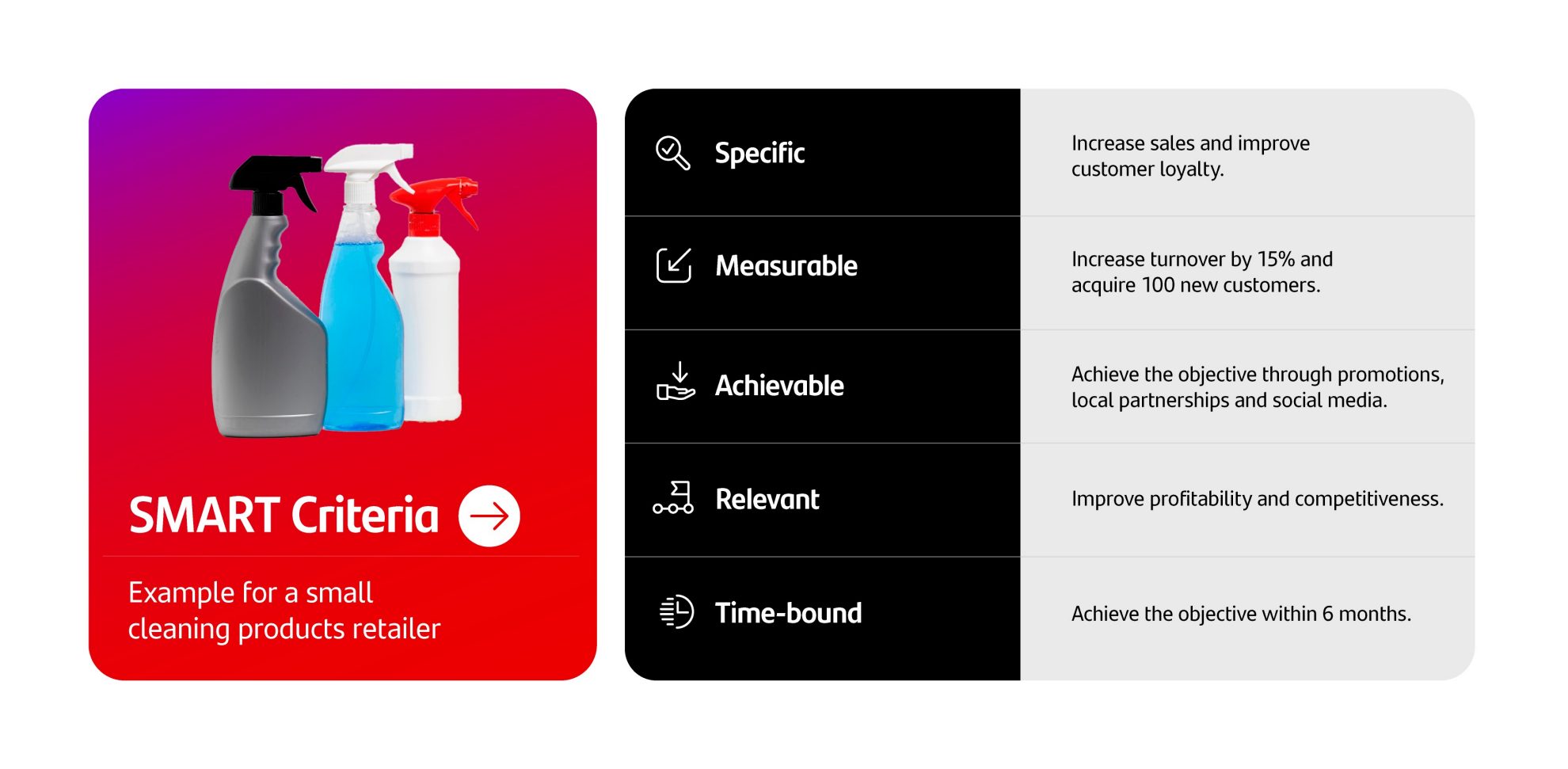
To launch a successful digital marketing strategy, it is important to apply processes that have traditionally proved effective. One such approach is the SMART methodology:
Specific: define exactly what you want to achieve.
Measurable: sets out clear indicators.
Achievable: set your goals according to your resources.
Relevant: links the objectives to the overall business strategy.
Time-bound: sets specific deadlines.
This methodology becomes even more effective when combined with analytics and artificial intelligence tools. These provide real-time insight into campaign performance, allowing businesses to identify what's working, make timely adjustments and optimise investment before performance and profitability begin to decline.
Tips for using AI in digital marketing
AI can be a powerful tool for supporting digital marketing activity. It can accelerate processes, improve efficiency and help businesses make more informed decisions - but it works best when used with clear objectives and human oversight. AI-powered tools can also be used to model growth scenarios and estimate potential outcomes before a campaign launches, helping businesses make data-driven decisions, optimise their investment and reduce risk.
It is also advisable to use AI to create several versions of the same advert and carry out A/B testing on an ongoing basis. Small, cumulative improvements can significantly boost campaign performance. For SMEs, the challenge is no longer about competing with big budgets, but about making the most of the tools available to better understand their audience, build trust and deliver memorable experiences. And in the age of AI, the competitive edge still belongs to those who know how to use technology with real ‘intelligence’.
Furthermore, AI helps to identify which channels generate the most sales, which messages convert best and which type of customer has the greatest potential to make a purchase. This information enables the budget to be allocated much more efficiently.
Some practical applications include:
Generating ideas for content.
Writing copy for adverts and emails.
Automation of customer responses.
Trend forecasting.
Optimisation of advertising campaigns.
Advanced audience segmentation.
Understanding the audience: the new strategic asset
Personalisation has become one of the key factors for success. Consumers expect relevant experiences, messages tailored to their needs and increasingly accurate recommendations. That said, experts advise against segmenting your advertising and marketing campaigns solely by age or location. Create profiles based on behaviour and purchase intent. Two customers of the same age may have completely different needs.
To achieve this, here are a few important points to bear in mind:
Demographic data.
Shopping habits.
Interests and motivations.
Digital behaviour.
Favourite channels.
Web analytics tools, CRM (customer relationship management) systems and ‘social listening’ on social media enable businesses to gather valuable information. Added to this are AI solutions capable of identifying behavioural patterns and predicting future purchasing decisions. The better a company knows its customers, the more likely it is to deliver the right message at the right time and increase its conversion rate.
It is important to bear in mind that companies that stand out in 2026 tend to combine three elements: specialisation, an outstanding customer experience, and credibility demonstrated through success stories, reviews and expert content on your corporate website (or blog).
Some tools that are particularly useful for SMEs are:
Google Analytics 4 for analysing user behaviour.
Google Search Console to improve SEO rankings.
Meta Ads for advertising on Facebook and Instagram.
LinkedIn Ads for B2B campaigns.
Canva for visual design.
HubSpot, Mailchimp or Brevo for marketing automation.
ChatGPT and other AI platforms for content generation and research.
Put some of the most effective trends we’re seeing in 2026 into practice
Social media trends are constantly evolving, and formats that once generated strong engagement may no longer deliver the same results. With so many platforms, formats and content types to choose from, the challenge is knowing where to focus your efforts. Success isn’t about being everywhere, it’s about being where your potential customers are and creating relevant, valuable content that gives them a reason to engage with your brand.
Some of these ideas are:
Short video: short-form content continues to capture users’ attention. ‘Reels’ and ‘Shorts’ on Instagram and TikTok make it possible to reach large audiences on a tight budget.
Informative content: consumers look for answers before making a purchase. Practical guides, tutorials and success stories help to build trust.
User-generated content (UGC): this is key, although it isn’t always easy to put into practice. However, you can draw on customer recommendations and real-life experiences, as these have a greater impact than many traditional adverts.
Make the most of Santander X’s free resources
Santander X offers unique resources for entrepreneurs and SMEs looking to improve their digital marketing strategies. If you’d like to find out more, here are some resources that might interest you:
- Free course in Digital Marketing to increase your sales in partnership with the Instituto de Empresa.
- Free course in Google: Practical AI for Marketing in collaboration with Google.
- Free course in Growth marketing strategies for your business in collaboration with ISDI.
Now is the time to take the next step. At Santander X, we help you connect with everything you need not just customers but also investors and market access and we provide you with the necessary resources to do so: online courses, training programs or promotions.